
Facing the Fear of Intimacy After an Affair with Jay Stringer
Months or even years after infidelity, intimacy can still feel like the thing you want most and the risk you can't afford to take. You want to be known but can't imagine letting your guard down again. In this episode, we are joined by licensed mental health counselor and author Jay Stringer (Desire, Unwanted) and Affair Recovery's Laurie Bryson to talk about what intimacy is (more than just sex), why the grief and anger you're carrying may be the raw ingredient of connection rather than the barrier to it, and how couples begin to write a new script for intimacy. These wounds won't heal themselves, but they can heal.
Continue reading →
The Danger of Despair: How I Sabotaged My Own Healing
 I remember telling my wife, well into our recovery journey, “If nothing else, we never have to question whether we love each other because two people would have to love each other an enormous amount to go through this much pain in an effort to heal together.” I know from personal experience—I have been both betrayer and betrayed—that the pain is felt by both parties, although in different ways and with different effects. I also know from personal experience (my first marriage ended in divorce due to mutual infidelity) that sometimes even that isn’t enough, and either party can end up alone and suffering in just as much agony.
People can tell you that time heals all wounds. In reality, it takes time and effort, at least if you want to truly heal. It did help a bit, when my wife and I were at the lowest points of it, to hear and read the stories—and even to hear them live from new people we met through Affair Recovery—of people who had been where we were and had come out whole on the other side, with relationships that were even better than they had been before. It was good to know that was possible. Often, though, in the moment, the pain was so unbearable it was easy to feel it would never end, and that everything was hopeless. That could be true for either party in the flooding moments—when the sobs and the rage and the screams coalesce into a maelstrom of emotion that is impossible to adequately describe in words. It can also be true in the quieter moments, when despair seeps down into the core of you and you don’t know how you can endure. Such moments can make either or both of you even more susceptible to the darker angels of your nature. And in some ways the hardest part is that, even if you are able to acknowledge the possibility of healing, there is simply no way to know how long it will take.
I had an emotional affair with a former girlfriend. After D-Day, my wife and I discovered Affair Recovery and did EMS Online. After that we continued (with the one couple from our group that was willing) with Married for Life. We learned a lot—but I didn’t learn enough, or at least it didn’t take as well as it should have. A year-and-a-half after D-Day, and a year after finishing EMS Online, my wife was still flooding just as intensely and as often as ever. I started giving up hope on things ever getting better. I kept asking myself, “Is this what the rest of my life is going to be like?” I knew she was asking herself the same thing. Then the Covid lockdown came, and two weeks later my little brother died of a fentanyl overdose and we weren’t even able to have a normal funeral service to say goodbye. I was devastated. I found myself desperately longing for comfort and reassurance—but my wife was mourning doubly, for the brother-in-law she had come to love like her own flesh and for the life I had promised her, and she was simply too wounded to give the way I wanted. She could not just turn off her own feelings. Everything started to feel incredibly hopeless to me. And that can be dangerous.
I started yearning for the way my affair partner used to build me up, even though I knew it had really been a fantasy relationship on both our parts. I had an incredible urge to reach out to her. I knew it would be a mistake, and I didn’t do it—at least, not directly. I had secretly kept some photos of her from when we had dated fifteen years earlier, before I met my wife, and I doctored them into pornographic images that I looked at when I craved contact. It was more about emotion than purely about sex—but isn’t it almost always, in some combination? My wife found the pictures, and it was terrible. The pain it brought her seemed to be even deeper than the actual emotional affair had been, and we were set back to square one if not even farther. That’s what led me to Hope for Healing, and eventually to a much healthier mind and spirit…but I reflect often on the irony of it.
My inability to handle my despair and hopelessness about the situation led to me making the situation far worse. If I had not done that—if I had held on just a little longer—we would have reached the good place we are now much, much sooner. I share this perspective with the men in the Hope for Healing groups I lead. Learn from my example, I tell them: giving in to feelings of hopelessness can undercut what hope was actually there, and make it all so much harder.
Of course, that’s easier said than done. I gained a lot of tools in Hope for Healing, and a lot more from my individual therapy. I started seeing a trauma specialist at that same time, as a lot of my issues arose from my troubled childhood, and we met regularly until he retired five years later. We started with a lot of behavioral therapy, and I learned ways to calm myself in the moment. That is in many ways a fundamental need, as we have to master those techniques before we can progress to deeper healing—which we did, first with EMDR and then with Internal Family Systems therapy (which I learned about from Wayne at Affair Recovery). We also learned techniques to apply to those quieter moments of desperation, which I’d like to share with you now because they were so helpful to me.
My therapist introduced me to the Sedona Method Questions. When you are feeling anxiety or any other overwhelming emotion, don’t suppress it or run away from it—my go-to approach all my life, when I wasn’t seeking distraction from the touch or words of other women. No, allow yourself to feel it completely. And then ask yourself a series of questions. Is this feeling something I am capable of letting go of? Not am I willing, am I capable. Next—will I let it go? Do I choose to do so? And if so—when? This sequence allows you to express feelings to yourself in a controlled environment, giving them less hold on you.
The next step is not part of the official Sedona approach, and I am glad my therapist introduced me to it because it has proved to be one of the most helpful techniques I have learned. I wish I had known of it before I relapsed.
My final step: Can you imagine a time when this feeling/problem has been resolved and you are no longer troubled by it?
If you can’t, I encourage you to, well, try. And then let yourself feel that moment—that future time when the pain is gone, or at least minimized. Imagine what that feels like, and then feel it right now. It’s amazing how peaceful I felt when I learned to do that. I am not a trained therapist, but I can tell you it helped me enormously.
However you’re able to do it, and whether you are betrayer or betrayed, find the tools to navigate and rise above your feelings of hopelessness.
Your healing depends on it.
I remember telling my wife, well into our recovery journey, “If nothing else, we never have to question whether we love each other because two people would have to love each other an enormous amount to go through this much pain in an effort to heal together.” I know from personal experience—I have been both betrayer and betrayed—that the pain is felt by both parties, although in different ways and with different effects. I also know from personal experience (my first marriage ended in divorce due to mutual infidelity) that sometimes even that isn’t enough, and either party can end up alone and suffering in just as much agony.
People can tell you that time heals all wounds. In reality, it takes time and effort, at least if you want to truly heal. It did help a bit, when my wife and I were at the lowest points of it, to hear and read the stories—and even to hear them live…
Continue reading →
Why Would He Risk it All for the Affair? Inside the Unfaithful’s Mind
When an unfaithful spouse risks marriage, family, and career for an affair, the betrayed spouse’s logic feels painfully simple: they must not have valued any of it. The affair, or the addiction, must have mattered more than the betrayed spouse did.
But is that actually true?
Recently, on an intake call, a woman familiar with my story asked me, “Why didn’t your husband leave you for his affair partner? He loved her, not you.”
Taken aback by her bold question, I answered, “He was going to lose it all.”
She fired right back, “But he didn’t value what he was going to lose, so why would that even matter?”
I replayed that conversation for the rest of the week. Then I remembered a comment on the podcast episode where my husband and I shared our story: “Candace, can you please ask your husband why he risked it all?”
The Fantasy…
Continue reading →
Breaking the Relapse Cycle: What Being a Betrayer and Betrayed Taught Me
 I’ll never forget the look on my wife’s face the day she discovered my infidelity. The betrayal, the disbelief, the agony...as everything she thought was true in the world and everything she thought was good in her life was jerked out from under her. The look in her eyes haunts me, and always will.
In six years at Affair Recovery and after leading nearly two dozen Hope for Healing groups, I have found the above statement (or words to that effect) to be virtually universal among the unfaithful men I have accompanied on the first steps of their journey to recovery. It is true for me as well—but on more levels than for many in my situation.
My wife and I had been married for eight years and had a six-year-old child when I started an online affair (it was the early days of the internet), which became a physical one with a younger woman. I had left my computer open when I went to work, and my wife saw all my conversations—explicit conversations that would later become known as “sexting”—with my affair partner. When I pulled into the driveway that day, she was sitting on the front stoop, crying. I had no idea what could be wrong. I rushed forward to comfort her. When she looked up at me and I saw the pain in her eyes, I immediately knew what had happened.
But I was caught up in the limerence. I was convinced I was madly in love with this young woman I barely knew and could not give her up. I announced I was going off to start a new life with her and left our home to meet with her, thinking I would never come back. Within a couple of days, I realized what a mistake I had made, and I called my wife and begged her to let me come home. She did, and I never saw the affair partner again. The day I came home into my wife’s arms was one of the happiest moments of my life, and I was so incredibly grateful to be there. I swore I would never do anything like that again, and I meant it. I felt like we had a new start.
But as we all know, it’s not that easy.
We attended couples counseling. As betrayers tend to do, I spent most of the sessions deflecting, justifying, and shifting blame. If only she had met my needs better. If only this, if only that. She grew ever more distant. Within a year or so, I suspected—accurately, as it turned out—that she was having an affair herself. I caught her the way she had caught me. I had never known such pain. I cried bitterly; I screamed and keened like a wounded animal. When my throat was too raw to scream anymore, I kept screaming on the inside for what felt like forever. We reconciled—or tried to—but we began a long, spiraling dance, cheating on each other over and over for the next six years. Finally, she found someone she wanted to start over with and left for good. Despite all the ways we had hurt each other, I was devastated. I knew it was me who had started the chain reaction and that I deserved what I was feeling far more than she did. I swore I would never cause such pain to someone I loved ever again.
And I meant it.
Three years later, I remarried, and we were incredibly happy together. Seven years into our marriage, I reconnected with an old girlfriend online. We spent a lot of time reminiscing about the year we had dated (after my first marriage) and the abrupt way things had broken off (with her cheating). We met for coffee, and the spark was still there. Soon we were texting back and forth all day long, every day, sharing every thought and each day’s mundane events. She was also with someone now—but before long, we were talking about how much we loved each other and always would. And then we were talking in detail about the things we used to do sexually and the things we’d still like to do. Neither of us, though, wanted to leave our partner—we had grown codependent and had become one another’s fantasy escape release valve. We occasionally met in person, usually in public places. I deluded myself into thinking that because it was only words and not physical actions, I wasn’t cheating.
About a year after my emotional affair began, I started to suspect my wife was being unfaithful. By this time, I knew all the signs inside and out, from both sides. I managed to get access to her iPad and learned that she had been meeting other men on an “adultery” website. Once again, I was devastated—far more so, in fact, than in my first marriage. I would never have believed my current wife capable of betrayal. She was the one woman I had trusted completely (just as I was the one man she had trusted). I recognized the irony of that, considering my own ongoing secret relationship. She was racked with guilt when discovered, and I realized how much I loved her and wanted to be with her forever.
But I didn’t end my emotional affair. If anything, I doubled down on it, using my wife’s infidelity as justification for trying to have my cake and eat it, too. Until two years later, that is—when I was discovered. Shortly after that, my wife and I found Affair Recovery and EMS Online, and later Harboring Hope and Hope for Healing (when I relapsed a year after D-Day).
I have been married twice, and in both marriages, I was both the betrayer and the betrayed. It is a depth of experience no one would wish for, but knowing so intimately what it feels like to be betrayed has helped me in my efforts to bring empathy for both roles into my discussions with the groups I lead.
It also provides an object lesson. At the end of my first marriage, I was crushed by the pain I had caused and sincere in my commitment never to do it again—but I did not address the core issues that had led me down the path of betrayal in the first place, thus virtually guaranteeing that I would do it again. “It’s your best efforts that got you here.”
What I have learned in the years since—through Affair Recovery and my own therapy—is that many of us carry a black hole inside us. It sucks everything in. We’ve usually carried it since childhood, and we spend our lives trying to fill it—through other people, through addictions, or through both. But no one person can make you happy. No one human being can fill that emptiness. We have to face the black hole, figure out how it started, and learn to fill it ourselves. Only then can we find balance or peace.
But you know what? No one can do it for you, but those of us who have been there can help you learn to do it for yourself and walk you through the first steps of the journey until you can stand on your own.
And that can make all the difference.
I’ll never forget the look on my wife’s face the day she discovered my infidelity. The betrayal, the disbelief, the agony...as everything she thought was true in the world and everything she thought was good in her life was jerked out from under her. The look in her eyes haunts me, and always will.
In six years at Affair Recovery and after leading nearly two dozen Hope for Healing groups, I have found the above statement (or words to that effect) to be virtually universal among the unfaithful men I have accompanied on the first steps of their journey to recovery. It is true for me as well—but on more levels than for many in my situation.
My wife and I had been married for eight years and had a six-year-old child when I started an online affair (it was the early days of the internet), which became a physical one with a younger woman. I had left my computer…
Continue reading →
Will They Cheat Again? Facing the Fear of Relapse After Infidelity
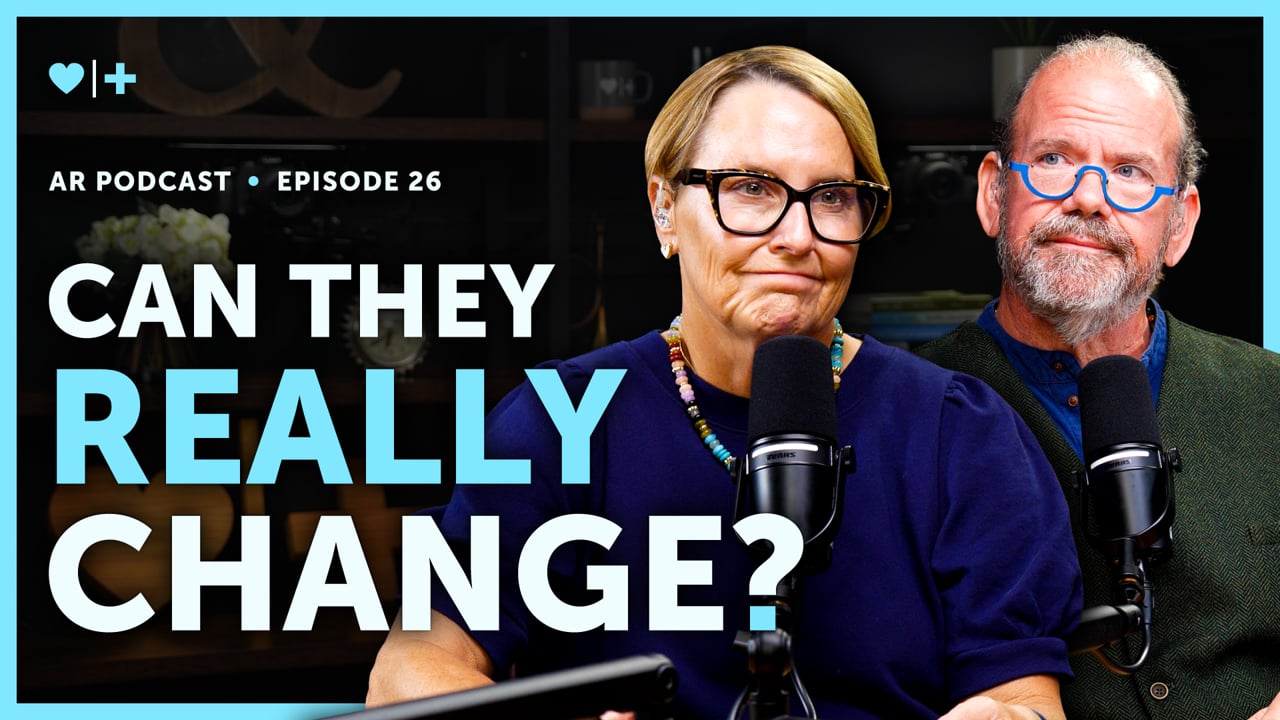
Will they cheat again? Once you’ve been betrayed, that question can follow you into every quiet moment, and the comment sections don’t help: once a cheater, always a cheater. If you were the one who was unfaithful, you may carry a quieter version of the same fear: can I really change? Jeremy is joined by therapists Brett, John and Laurie to talk honestly about what relapse is and isn’t, how common it really is, and why “I know what I’m capable of” is safer than “I’ll never do it again.” The fear is real. So is the path back to a marriage that feels safe.
Continue reading →
Before I Betrayed Him, I Betrayed Myself
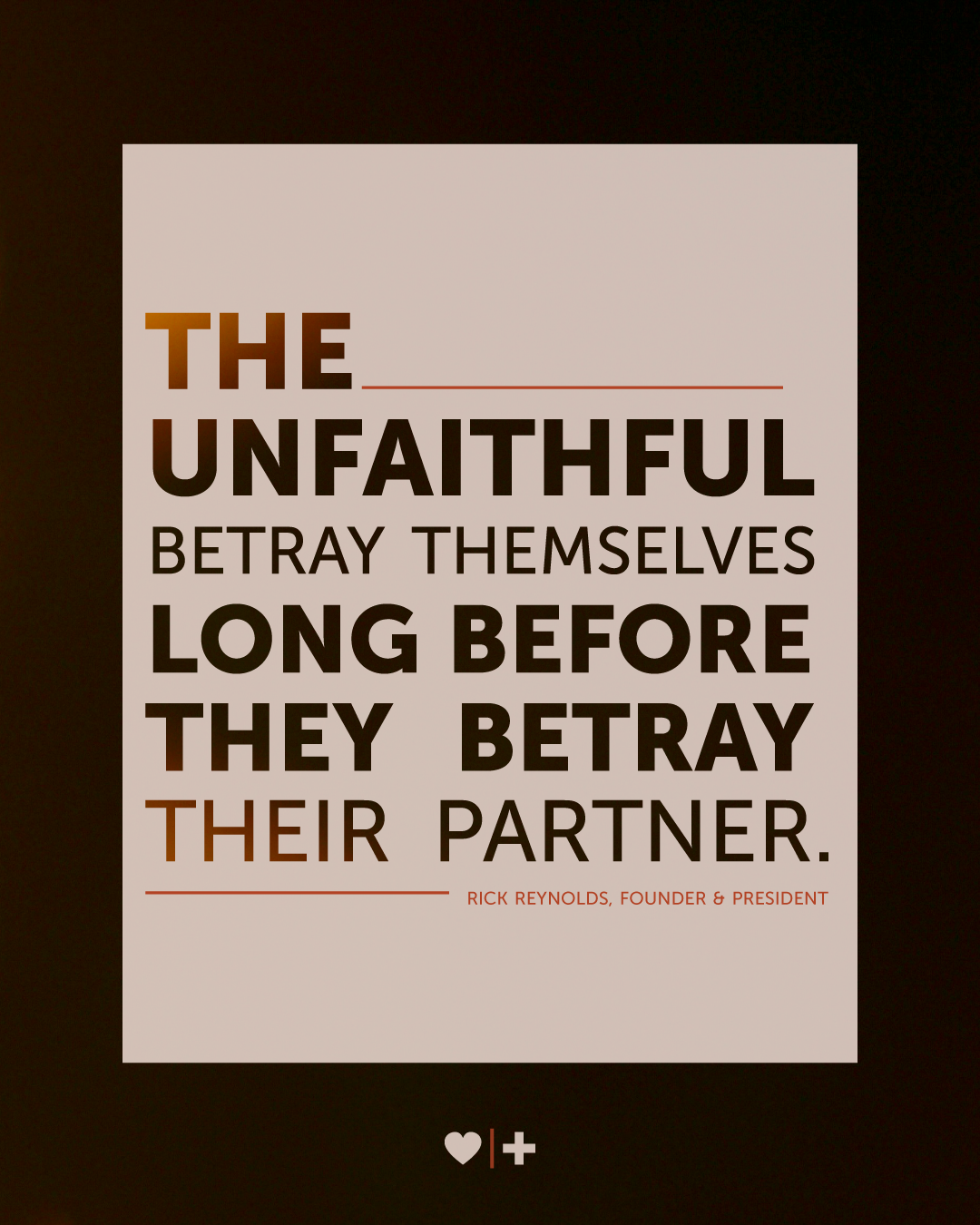 “The unfaithful betrays themselves long before they betray their partner.” – Rick Reynolds
This statement took me far too long to fully understand. How could I betray myself when I didn’t even know who “myself” was?
Growing up, I lived in a house where love was granted or denied based on how well I could read my mother. If I could anticipate her every need, thought, and wish—and fulfill them—I had her love. When I couldn't figure it out, I was met with anger, stonewalling, and silence. I learned quickly how to read people and morph into whichever version was most acceptable to those around me. I also learned to hide the parts of myself I thought wouldn't be accepted. Throughout my entire childhood and young adulthood, I played out this same pattern. I was perfect for everyone—exactly who they wanted me to be—until things started falling apart and I began to slip up.
Then, I would rebel, abandoning that image of perfection for the exact opposite.
When I got married, I—like most unfaithful spouses—thought I could leave all that behind, even though I couldn’t have articulated what I was leaving behind. I’d already had a few "secret rebellion" moments during our engagement, but I assumed I was just getting it out of my system before fully committing to being the ideal wife and mother. In hindsight, that urge never went away. I flirted. I searched for "better." I was never fully in, and I had no idea. Instead, I blamed my husband and his own struggles, never allowing myself to look deeper.
As life progressed and the stress of family life and maintaining "perfection" started breaking me, I snapped. My husband was away working to provide a better life for us, leaving me in charge of everything at home. In my overwhelm, I ran—from my husband, my family, and my "perfect" self. I abandoned not only my husband and kids, but also everything I had ever wanted to be. I put my children in situations that hurt them because I was too busy rebelling. I turned my anger and resentment toward my husband, making him the fall guy for everything. I was spiteful, completely unaware that I was rebelling against expectations I had placed on myself—not ones he had ever put on me.
After he discovered one affair and I confessed to the rest, I was completely appalled by the person I had become. I finally began to look deeper at who I was and the choices I had made. Still, I didn't recognize the pattern yet. I dove straight into "recovery perfection." I hated who I had become and couldn't trust myself. In those early months, instead of working toward becoming the person I wanted to be, I became the person I thought my husband needed me to be. Granted, this time I actually asked him what he needed instead of assuming with zero accuracy, but it still wasn't me. I still didn't know who "me" was—I just knew I couldn't trust her.
I was terrified that the broken, rotten shell of a human hiding behind a porcelain mask was who I truly was. I was just really good at switching masks. In early recovery, I threw myself back into my roles: wife, mother, recovering addict, Christian. I took my cues from my husband and never wanted to be far from him. I trusted his vision of who I should be far more than my own sense of self.
I am so grateful for his grace during that time. He could have said or done anything, and I would have gone along with it. He could have been abusive, and I would have felt I deserved it. He could have told me I was a waste of space, and I would have believed him. He was in so much pain—pain I caused—yet instead of taking it out on me, he worked on himself. He took steps to ensure he was healed enough to walk alongside me so we could build a safe space together. He built me up as authentically as he could.
During this time—as I began working on myself through Hope for Healing, EMS Online, and infidelity-specific individual and couples therapy—I started seeing the pattern. It would take years before I could fully articulate it, but I was beginning to learn who and what I wanted to be. Heck, I was even learning that I actually had wants and needs of my own. It was another adjustment for both of us as I stepped out of his shadow, figured myself out, and gave my inner self a voice—one that had been silenced for far too long. Bit by bit, I realized my true inner self could be trusted. I learned how to distinguish between God, myself, and the enemy. I learned to identify my motivations and share them. Most importantly, I learned who I was so I could finally share that true self with my husband.
I don’t have it all figured out. There are still times I want to run—times I forget that I don’t have to be perfect or have it all together. Times when the choices of others affect me, my marriage, and my kids in ways I can’t control. Stress, finances, parenting, addiction, and LIFE—they all still happen, and I still fail. I drop the balls I'm juggling. I open my closet of masks and try to hide. But I am blessed: blessed with a husband who loves me for the woman he only recently got to know, and blessed with a support system of friends whom I trust to call me out when I start to hide or run. I trust them to help me keep learning who I am and to speak to me authentically and honestly.
It is a long road. Recovery doesn’t have an end date; it’s a lifelong journey of continued growth and learning. But I can honestly say that today, I know who I am, who I want to be, and I am fully here for it.
“The unfaithful betrays themselves long before they betray their partner.” – Rick Reynolds
This statement took me far too long to fully understand. How could I betray myself when I didn’t even know who “myself” was?
Growing up, I lived in a house where love was granted or denied based on how well I could read my mother. If I could anticipate her every need, thought, and wish—and fulfill them—I had her love. When I couldn't figure it out, I was met with anger, stonewalling, and silence. I learned quickly how to read people and morph into whichever version was most acceptable to those around me. I also learned to hide the parts of myself I thought wouldn't be accepted. Throughout my entire childhood and young adulthood, I played out this same pattern. I was perfect for everyone—exactly who they wanted me to be—until things started falling apart and I began…
Continue reading →
Multiple Affairs, a Child, and a Marriage That Survived All of It with Cindy Beall
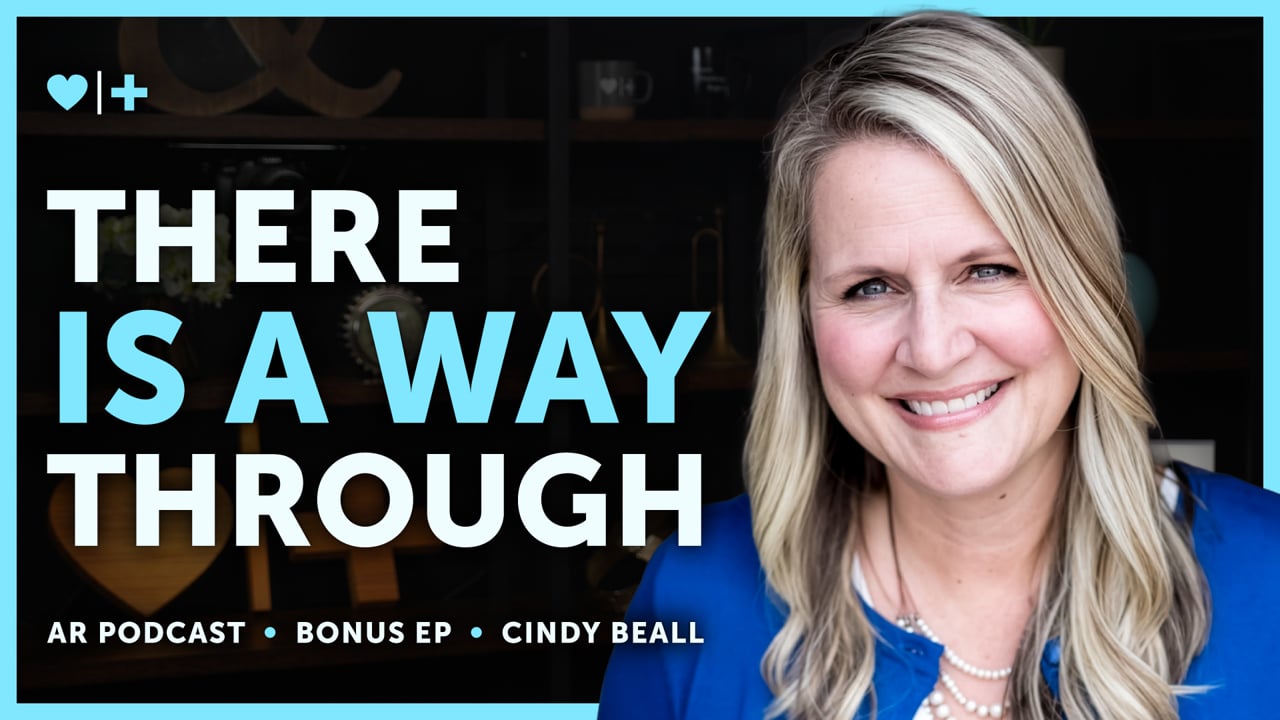
Cindy Beall's husband came home one morning and confessed to multiple affairs over two and a half years. Then came the final blow: one of the women was pregnant. Cindy went into a despair so deep she didn't know how she would keep living, let alone stay married. Twenty-five years later, she looks back on a marriage that not only survived but became the one she had always hoped for. In this bonus episode, Jeremy sits down with Cindy, a pastor, author of Healing Your Marriage When Trust Is Broken, and past Hope Rising speaker, to talk about why forgiving him did not make the pain stop, how she came to love the son born from the affair, and what she would call back with hope to anyone still in the pain.
Continue reading →
From Triggered to Solid: How Unpacking Your Childhood Trauma Helps Your Spouse Heal
Continue reading →
Understanding the Phases of Recovery: Is this normal?
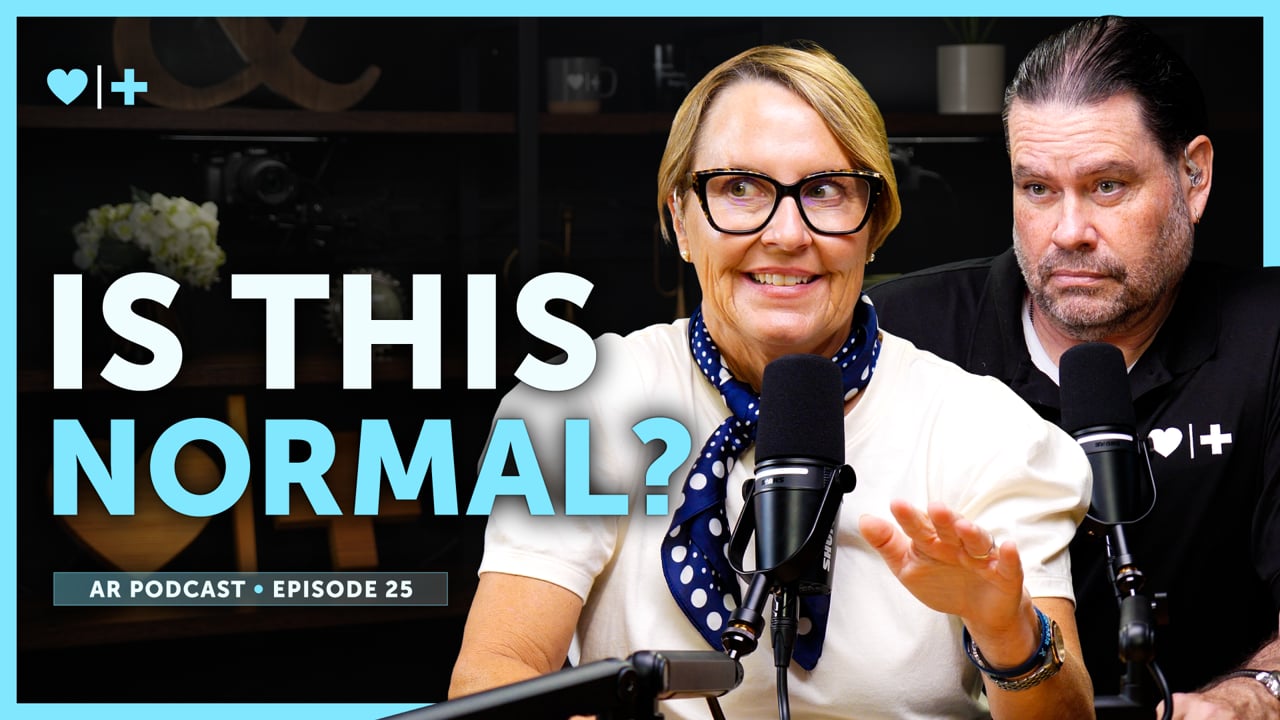
Should we just quit? Why does it feel worse now than it did a few months ago? What are we doing wrong? One minute you can't get close enough, the next a single look sends you both back to your corners, and you're left wondering if any of this is normal. In Episode 25, Jeremy sits down with Rick Reynolds, John Haney and Laurie Bryson to name the phases of recovery that feel like failure but aren't, and how to tell a hard but normal season from a pattern that needs to be confronted.
Continue reading →
How to Make Your Betrayed Spouse Feel Chosen Again
When the truth about my husband's affair blew our lives completely apart, I told him straight to his face: “This house has five exit doors. Take your pick.”
I wanted him gone. I wanted the kids, the house, and half his paycheck for the rest of his life. I was done.
But today, we’re not just limping along, barely surviving. We’ve completely rebuilt our marriage.
Betrayed spouses wonder if staying is even possible and many unfaithful spouses are desperate to stop divorce papers from being signed. Before recovery, I was begging for truth while my husband gave me watered-down versions of his affair. So, when he said he wanted to fix it, his words meant nothing to me. If infidelity communicates one thing to a betrayed spouse, it is the devastating realization that they are of ZERO importance.
I spent nine of my working years at one of the top luxury…
Continue reading →
Hope Rising: Companions for the Darkest Roads
 When I was a kid, my family took a summer road trip from our home in Houston to Colorado. We left around 8 p.m., when we knew the traffic had mostly calmed down, and drove through the night toward New Mexico, our first stop along the way. This was before cell phones, GPS, and Siri could tell us which roads were closed or offer an alternative route when we missed a turn. Before we left, I watched my dad unfold a large paper map across the kitchen table. He and my mom leaned over it, studying the route while my dad traced the highway lines we would take.
There are plenty of moments I remember about that trip—the cassette tapes my parents kept on repeat (thank you, Dad, for introducing me to The Eagles at a young age), their irritated voices when one of them misread the map, and the questionable roadside restrooms.
But what I remember most is the darkness.
I sat in the back seat of our Chrysler minivan with my face pressed against the window, staring out into the night. My eyes strained to trace the objects in the distance, trying to make sense of what my brain couldn’t quite compute against the speed of the vehicle and the absence of light.
I wasn’t exactly afraid of the dark. I was afraid of how the darkness made me feel.
I didn’t have language for it back then, but I know now that my body braced against the uncertainty of what I couldn’t see.
Where are we?
What's around us?
Where are we going?
How much longer will this last?
Are we safe?
Finally, after hours of traveling this way, a faint haze of light appeared on the horizon. As we inched closer, more lights emerged against the dark backdrop, and a part of me sighed with relief.
The road hadn’t changed. But now I could see where we were.
In some ways, I still respond this way to darkness. Even now, as a 45-year-old woman, I clamor for the window seat on a nighttime flight so I can search the darkness below for lights.
Maybe this is part of why the early days of recovering from intimate betrayal felt so disorienting to me.
I couldn’t find the light.
Suddenly, I was forced to ask myself many of the same questions I’d asked from that backseat decades earlier:
Where am I?
How long will this last?
Am I safe?
Only now, the road I couldn’t see was my own life. And there was no paper map spread across the kitchen table showing me how to get from where I was to where I needed to go.
So, I looked to people who were a few steps ahead of me. I desperately wanted some evidence that the darkness I stood in wasn’t all there was.
I needed companions who understood the particular grief caused by relational rupture—who knew firsthand the disorientation of a life divided into "before" and "after." I wanted people who could walk through the dark and stay beside me on the long stretch. Companions who could give me enough light to see where to put my feet next. Their presence seemed to say:
Keep going.
Take one more step.
I'm holding the light for you until you can see it again.
Over the years, these companions have shown up in many forms. Therapists and experts gave me language for experiences I didn’t yet know how to name. I still remember the relief of hearing one explain how betrayal can affect the immune system—that what my body was doing was real. Books and therapeutic practices helped, too. So did groups of women navigating their own stories of betrayal—these partners who were willing to tell the truth about both their pain and their healing.
Hope Rising became one of the places I found companions like these. Yes, experts were there, but many of them knew the impact of intimate betrayal from personal experience. I felt reassured as I heard from others who really understood and had traveled the same terrain.
A single word, a phrase, or someone saying in her own way, "I know something about this road, too," became a glimmer of light.
And that was enough for me to take the next step.
And the next.
If you feel like you’re standing in the dark and straining to find light, I invite you to explore Hope Rising.
You might benefit from Hope Rising. if:
You’re in the early days of discovery and need to hear from people who can see farther down the road than you can right now.
You’re months or years into recovery but need encouragement, perspective, or renewed hope.
You feel isolated in your experience and long to hear someone put words to something you haven’t known how to explain.
You want to better understand some of the emotional, physical, relational, and spiritual effects of betrayal.
You’re rebuilding your marriage, rebuilding yourself, or still trying to figure out what rebuilding looks like for you.
You want the flexibility to listen and return to certain talks when you need them.
Hope Rising 2026. opens October 1. You’ll have lifetime access and be able to watch privately and at your own pace. Early Bird access is $39 through October 15 (regularly $65). And because every purchase funds the Affair Recovery Scholarship Program, your own step forward helps someone else afford theirs.
You may not be able to see the whole path ahead of you today. Maybe all you see is darkness.
But maybe one of the voices in this collection can hold a little light for you until you can see again.
When I was a kid, my family took a summer road trip from our home in Houston to Colorado. We left around 8 p.m., when we knew the traffic had mostly calmed down, and drove through the night toward New Mexico, our first stop along the way. This was before cell phones, GPS, and Siri could tell us which roads were closed or offer an alternative route when we missed a turn. Before we left, I watched my dad unfold a large paper map across the kitchen table. He and my mom leaned over it, studying the route while my dad traced the highway lines we would take.
There are plenty of moments I remember about that trip—the cassette tapes my parents kept on repeat (thank you, Dad, for introducing me to The Eagles at a young age), their irritated voices when one of them misread the map, and the questionable roadside restrooms.
But what I remember most is the darkness.
I…
Continue reading →
Literally Broken: What It Took to Take Recovery Seriously
 Most people do everything they can to avoid rock bottom. But sometimes, it takes a violent collision between our pride and our reality to finally wake us up. In
Hope for Healing, we frame brokenness not as destruction, but as a turning point—the moment you stop pretending you have everything under control, step out of the self-centered box, and open yourself to true empathy.
The guys in the group are asked to reflect on the best example of brokenness they can think of in their own journey of healing. I always share mine with them, because it is literal as well as metaphorical, and is therefore a powerful way to demonstrate the point.
I started Hope for Healing in late July, 2020, when I had relapsed eighteen months after D-Day. We got to the brokenness chapter in early September. One Thursday night in the first week of that month, I had to do a sleep study. If you’ve never had one, they put you in a surreal room—part hospital, part hotel—and hook you up to a web of wires and monitors. I barely slept. They released me at 7:00 AM, giving me just enough time to run home, shower, and head to work.
When I got home, I found my wife already flooding. A female French-Canadian acquaintance of mine had responded to something I said on Facebook, and had called me "mon ami" (“my friend”). This is very different from “mon amour,” which could be a romantic term. Exhausted, rushed, and stressed, I instantly became frustrated. At that point in my journey, I hadn't yet learned how to handle that level of pressure. My default response to overwhelming frustration was self-harm—beating my head against the wall or pounding my temples with my fists, a reaction that terrified my wife and always escalated the situation.
Trying to escape the pressure, I half-ran to the bathroom. Once out of sight, I started punching myself in the head. Disoriented and moving too fast, I lost my balance, and the bathroom rug slipped out from under my feet.
I fell backwards, hard. Without thinking, I stuck my left arm out to break my fall—and it snapped, right at the shoulder. Broke clean through. My whole arm was hanging from my shoulder by the flesh alone. I screamed bloody murder, and my wife came to help me up. I remember her handing me my arm and driving me to the ER. Unfortunately, rural hospitals often have staffing problems, and this was the Friday before Labor Day weekend. There was no one there who could set my arm, and would not be until the following Tuesday. They sent me home with pain killers, but I had to sit motionless for four days (because the slightest movement was agonizing). My wife had to wait on me hand and foot and help me to the bathroom and back.
When I did get to see an orthopedist, I was admitted to the hospital for surgery to install a steel rod in my arm. I handed my wife my phone as they were wheeling me away, leaving her alone to wait. She went through my phone, which is natural in our circumstances. I had given her all my passwords. What I had not anticipated was her reading through my texts with the accountability partner she had recommended to me, and which we had agreed would be confidential. She did look at them, and as a betrayed spouse, I may well have done the same, and was flooded by the discussions she read.
When I came out of anesthesia, I was greeted by a traumatized wife who now had to act as sole caretaker for the next few weeks for the person who had deeply betrayed her.
And that was the exact week we discussed the brokenness chapter in group.
It got my attention in a way it might not have had it come a few weeks earlier. I was literally broken. Literally helpless. And completely reliant on the person I had betrayed. But I also realized something else.
I’d had a steel rod nailed to my arm, holding it together. It was painful to heal from, agonizing sometimes, and I knew it would leave deep scars. But, once that healing happened, that arm would be much stronger than ever before, and be able to endure much more pressure.
I think that was a turning point for me. I’d agreed to do Hope for Healing to make my wife happy, and to show her I was taking some steps in the right direction, but I had not been taking it as seriously as I should have. I was still deflecting, minimizing, and justifying, thinking this stuff doesn’t really apply to me because, deep inside, I was still telling myself what I had done wasn’t really that bad. But my accident, coming when it did, humbled me. I took my journey very seriously after that. I still had a very long way to go, but it was a start.
How about you? Have you been broken? It is no fun, especially when you caused it yourself. You may not have as literal an example as mine, but I bet everyone reading this can think of a time when they were at that place. The question is, what do you take from it?
When I was young I had a friend and religious mentor who had an affair that became public. He lost his position and was ostracized. I worried about him, but I was also a little hopeful. This man had always had a tendency to be self-righteous and judgmental. I hoped that this experience would humble him and make him have more empathy for others. It had the opposite effect. When allowed to return, he was more judgmental than ever because he was trying to prove he deserved to be back, and that he really was better than those other sinners.
He missed an opportunity to grow, and to truly heal.
Don’t be that guy. If you were unfaithful, pride played a role. Let this horrible, painful fall lead you to a healing that makes you humbler, more loving, and more empathetic.
And stronger.
Most people do everything they can to avoid rock bottom. But sometimes, it takes a violent collision between our pride and our reality to finally wake us up. In
Hope for Healing, we frame brokenness not as destruction, but as a turning point—the moment you stop pretending you have everything under control, step out of the self-centered box, and open yourself to true empathy.
The guys in the group are asked to reflect on the best example of brokenness they can think of in their own journey of healing. I always share mine with them, because it is literal as well as metaphorical, and is therefore a powerful way to demonstrate the point.
I started Hope for Healing in late July, 2020, when I had relapsed eighteen months after D-Day. We got to the brokenness chapter in early September. One Thursday night in the first week of that month, I had to do a sleep study. If…
Continue reading →
Infidelity + Life: When the Affair Isn’t Your Only Crisis
The affair most likely isn’t the only thing you’re carrying. There may be an illness, a loss, a job that fell through, kids who need you, or years of quietly holding it all together, and now you’re being asked to heal a marriage on top of it. In this episode, we sit down with Dr. Marcus Earle, Clinical Director of Psychological Counseling Services with 38 years in behavioral health, to talk about what to do when infidelity isn’t your only crisis, including the one thing he and Rick say to address before anything else. If life has piled on since the betrayal and you don’t know where to begin, this conversation is for you.
Continue reading →
Doing Everything “Right” and Losing It All: Untangling Anger at God After Betrayal
 “I DO NOT Deserve This!”
Does this resonate with any of you? Of course it does.
Finding out that your spouse has had an affair—or still is—rocks your world and may ultimately leave you asking the question: “What did I do to deserve this?!”
And you know the answer… You DON’T deserve this.
Now, come on, I know I’m not perfect; you know you’re not perfect. But damn it! Haven’t you tried to be a good wife? I know I sure did. Have a clean house when he gets home, (mostly) well-behaved kids who are attentive to dad. My body is certainly not what it was before five kids, but I take care of myself. Sure, I have days where my hair is in a sloppy bun from the moment I wake up to the moment I go to bed. But generally speaking… I keep up with myself. Most days, I put in the effort to not look like a bedraggled stay-at-home mom, but a loving, beautiful wife.
After I found out about the affair, the constant message running through my mind—and that I found myself asking him again and again—was:
“Damn it again! I love you! How?! Why would you do this to me?! My love has been fierce, passionate, devoted. Love—with a passion to see your best interest. Love—that wants to grow old together, to see our children grow up and move into their own lives. Love—that is willing to lay down my own life for yours. Love—that longs to be loved and cared for by you, and you alone.
I was a good wife. For 17 years.
I have fully supported you—in all your endeavors, even the ones that I thought were not your true calling.
I have loved you unconditionally.
I have accepted your shortcomings, your flat-out failures.
I have extended grace for your addictions; offered solutions; patiently and passionately prayed.”
And beyond all this, “God, what the heck? You see me—how as a Christian woman I have done all the ‘right things.’”
And so, anger at God? Yes. Absolutely. I felt like I was justified in my “righteous anger” because I did not deserve to be treated this way.
While this is true—none of us do—despite our own missteps and failings, we don’t deserve to be treated this way. My personal mistakes do not justify his behavior.
But here’s the thing—I need to come to terms with this idea of being angry at God. Because has God actually done anything wrong? Has He caused my husband to act out in this way? No, resoundingly.
It is 100% understandable to be angry with God. I sure was. It wasn’t until my husband’s second affair that the target of my anger transferred.
You see, God is for you. For your good. AND this world is a place inhabited by a bunch of self-centric men and women. If we are honest about it, we all have those moments where we act entirely in only our own best interest. And most of the time, others are not severely impacted by that moment of selfishness.
My first encouragement to you is that while you may want to blame God for this pain and disaster your life has become, it’s not His fault. Your husband is responsible for his own actions. And while you may have been doing all the “right things,” God doesn’t owe you anything. I know that sounds harsh, and truly, I am not trying to be mean. I understand you have enough going on in your life, and for me to be throwing difficult truths at you that you don’t want to hear—I get it; it may just be too much right now.
But perhaps later… when all is quiet, and the house has settled, perhaps then you can consider this.
This does not mean that God wants to see you in pain, or your marriage fall apart. He is a God of hope. A God of healing. A God of restoration. He is your safe place to run to in this storm.
He understands what it means to be betrayed. He really does. Wasn’t Jesus betrayed by Judas?
He understands what it means to be left alone in agonizing pain. Wasn’t He left alone on the cross to bear the weight of others' sin? Your husband’s sin, your sin, and my sin as well. He didn’t deserve it.
So please—don’t allow this truth to keep you from the One who can actually give you comfort, direction, and hope. God can handle your anger. Let Him have it.
And then, please, dear sister, allow God to bring the hope that you so desperately need right now. Let Him come and sit with you in your pain. Find your peace in Him.
He is our Hope. He is our peace. Surrender your heart to Him, with all its overwhelming emotions, and let Him calm the storm of your hurting heart.
“I DO NOT Deserve This!”
Does this resonate with any of you? Of course it does.
Finding out that your spouse has had an affair—or still is—rocks your world and may ultimately leave you asking the question: “What did I do to deserve this?!”
And you know the answer… You DON’T deserve this.
Now, come on, I know I’m not perfect; you know you’re not perfect. But damn it! Haven’t you tried to be a good wife? I know I sure did. Have a clean house when he gets home, (mostly) well-behaved kids who are attentive to dad. My body is certainly not what it was before five kids, but I take care of myself. Sure, I have days where my hair is in a sloppy bun from the moment I wake up to the moment I go to bed. But generally speaking… I keep up with myself. Most days, I put in the effort to not look like a bedraggled stay-at-home mom, but a loving,…
Continue reading →
Reclaiming Your Power Through Intervention
Betrayed spouses, I want to start by acknowledging something that is very real. If you’re in a relationship where trust has been broken, and where the person who hurt you isn’t fully stepping in to repair it, you can feel incredibly powerless. Perhaps you’re in a relationship where you face constant belittling, degradation, isolation, or aggression and have no voice. You may feel stuck between two painful options: Do I keep tolerating this, or do I blow everything up? Most people don’t want to do either of those. So, they stay, hoping things will change, as they try harder, wait longer, and absorb more of the same.
What I want to gently offer is this: There is another path, and it’s called intervention. Now, when people hear the word “intervention,” they often think extremes. You might picture the kind of intervention you’ve seen on TV when someone is…
Continue reading →
How to Forgive When You Can't Forget
Whether it's been months or years, carrying the weight of betrayal can feel like something you'll never be able to set down. You'd let it go if you could, but forgiving feels like saying it was okay, or letting them off the hook. In this episode, Jeremy sits down with Affair Recovery's expert therapists to answer listener questions about how to forgive when you can't forget, sharing what forgiveness looked like in their own recovery and clearing up what forgiveness is and what it isn't: not forgetting, not reconciling, and not saying it was okay. Forgiveness won't erase what happened, but it can remove the barrier that keeps you from healing.
Continue reading →
Surviving An Affair: Your 5-Step Emergency Guide
Everyone who arrives here has been handed a label that comes with a non-negotiable assignment. It reads betrayed, unfaithful, or both, and the assignment is recovering from the devastation that has been caused.
Betrayed spouses, what happened is not a reflection of who you are. Infidelity trauma will not define you forever, but right now it does, and I respect the betrayed too much to say otherwise.
Unfaithful spouses, stepping out of your terrible situation and showing up is a huge step. It means you are committing to the next right decision today, and every day after. The past cannot be changed, but the direction you are going can.
From circling the drain to finding life on the other side, following are five S’s for the beginning of your recovery roadmap.
Join other betrayed mates on the path to healing with our life…
Continue reading →
His Addiction, Her Affair: Healing When Both Are Betrayed
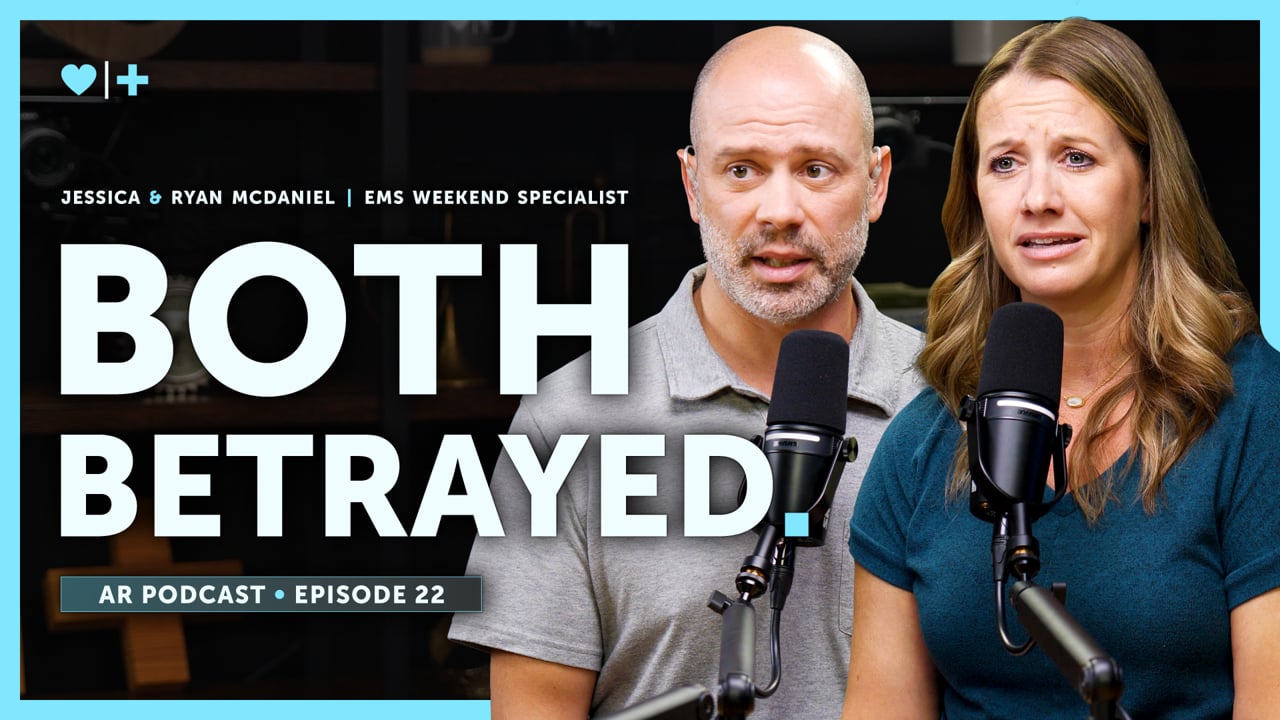
When betrayal runs in both directions, it's hard to know whose healing comes first, or whether healing is possible at all. In this episode, we sit down with Jessica and Ryan McDaniel, two of Affair Recovery's EMS Weekend therapists, as they share their own story: Ryan’s addiction, Jessica’s affairs, and the years of trickle truth before the whole story finally came out. Twenty years in, their marriage is living proof that betrayal doesn't have to define your story.
Continue reading →
Enter Drawing for Harboring Hope for Free
 Welcome to Affair Recovery's Harboring Hope Monthly Drawing. We want to know you. We want to serve you. This means we want to hear from you!
The first step is telling us what we can do for you. Please tell us why you’d like to take Harboring Hope. If you made a comment prior to a previous registration period, that comment is still good for your entry.
Remember, submit a comment of 500 words or less about why you'd like to take the Harboring Hope course. Remember, it's a random drawing so your entry won't be based on merit or on your situation. Comments will be moderated by AR staff. Drawings will be held monthly. If you'd like more information, you can also read our official rules.
The winner for September 2026 was "jmu"
with the entry "Like so many couples, my…"
Congrats, jmu!
The winner for July 2026 was "SheG."
with the entry "I have been through multiple...."
Congrats, SheG!
The winner for June 2026 was "Christy G."
with the entry "I have been married for...."
Congrats, Christy G.!
The winner for May 2026 was "Sonia"
with the entry "Beginning Hope"
Congrats, Sonia!
The winner for April 2026 was "Katie001"
with the entry "9 month on it's still so painful"
Congrats, Katie!
The winner for March 20026 was "SweatyYetiNZ"
with the entry "Help from a world away".
Congrats, SweatyYetiNZ!
The winner for Feb. 2026 was "JudyAnn9"
with the entry "I see no hope..."
Congrats, JudyAnn9!
The winner for January 2026 was "SFKP"
with the entry "While Again".
Congrats, SFKP!
The winner for December 2025 was "Ken15"
with the entry "Just passed 1 year mark".
Congrats, Ken!
Welcome to Affair Recovery's Harboring Hope Monthly Drawing. We want to know you. We want to serve you. This means we want to hear from you!
The first step is telling us what we can do for you. Please tell us why you’d like to take Harboring Hope. If you made a comment prior to a previous registration period, that comment is still good for your entry.
Remember, submit a comment of 500 words or less about why you'd like to take the Harboring Hope course. Remember, it's a random drawing so your entry won't be based on merit or on your situation. Comments will be moderated by AR staff. Drawings will be held monthly. If you'd like more information, you can also read our official rules.
The winner for September 2026 was "jmu"
with the entry "Like so many couples, my…"
Congrats, jmu!
The winner for July 2026 was "SheG."
with the entry "I have been through multiple...."
…
Continue reading →
Rebuilding What You Broke: Boundaries & Safety after Infidelity with Jim Ramos
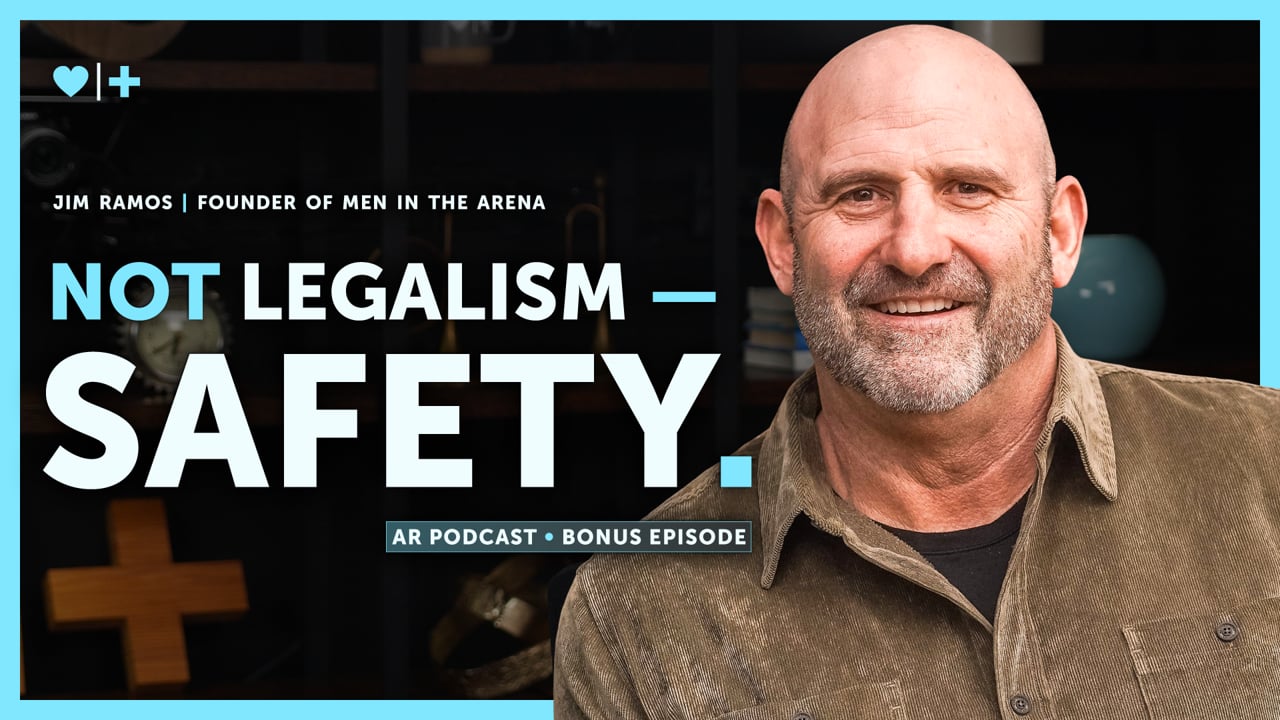
A promise is not a boundary. Saying “you can trust me” asks your spouse to feel safe; a boundary is what actually makes them safe. In this bonus episode, Jeremy and Rick Reynolds sit down with Jim Ramos, author of Guardrails and founder of Men in the Arena, who explains how a guardrail breach starts with something as small as a compliment and compounds from there, what your spouse is telling you when they ask for a boundary, and why being called legalistic may not be the insult it sounds like when your marriage is at stake.
Continue reading →
Silencing the Imposter: Finding True Validation in Recovery
 Healing from infidelity often leaves us questioning our fundamental worth and identity. Recently, I was meeting with a group of believers as we discussed our most recent book study. One of the members was talking about being “made in the image of God” and even though I have heard that phrase 500,000 times in my life, this time was different.
While sitting in my office chair on a video call, my inner self was whisked away to that place deep in my soul where big concepts begin. In that quiet place, the phrase 'made in His image' reverberated like a gong. Words began pinging against invisible walls: Wonderfully made. His character. Through me. For such a time as this.
All the bits and pieces of concepts and ideas and thoughts, and acquired knowledge from my entire lifetime and from a source outside myself were clanging and vibrating and moving until with a flash like lightning they all came together into the image of a new concept. One I actually had words for.
I “came to” in the meeting, totally lost as to what had been said, but buzzing with a brand new, life-altering concept. I waited for the words to finish forming, and for a space to speak, then shaking with nerves, I shared what I had learned.
We are created in the image of God. God is bigger and more infinite than any one human could ever fathom or be. There has never been a copy of any human in the entire history of the Earth. I am literally the only “me” that has ever existed or will ever exist. God made me. I am fearfully and wonderfully made. He created every part of me. Not only my physical appearance but also my character, my personality, everything about me. I am made in His image. SO…I am intentionally and specifically made in the image of specific and intentional characteristics and traits of God. I walk around with my own personal piece of Jesus living in my soul and I am the only person in all of history that can present it in the very “me” way.
What an incredible gift.
God has created each and every person in the history of all time past, present and future, to be a particular example of Him, if we will only recognize it and let Him show through. This also means that every person we come into contact with, also has a specific piece of Jesus living in them, even if they don’t know it yet, or choose not to show it, or have let the enemy cast a shadow over it.
It is there. In every person.
What if that is part of what it is to love like Jesus? To look at a person and see the piece of Him that exists within them? To look for the characteristics and traits of God that only they can portray to the world in the way He created them to. What if we looked for that in others?
In the wake of infidelity, looking at our spouse and trying to see the image of God in them can feel impossible. But what if we looked for the characteristics of God that they can portray, beneath the brokenness and the betrayal?
I will pray for help in getting there, not only with others, but with myself. As someone whose story has been deeply impacted by an addiction to validation, the approval of others, and an unhealthy need to be liked and wanted, this concept completely changes my perception of my recovery.
God gave me everything; God made me who I am. People don’t approve of the real “me”—they approve of the reflection of God that He placed in me. The character He gave me, the personality He placed there. No one can validate that except for Him. When the enemy whispers and tries to skew my worth—tempting me to seek validation in the world, or in the attention of others—I realize that it is just the world in them being drawn to the world in me. I don’t want that anymore.
My desperate need for outside attention and validation is exactly what Brennan Manning so aptly named “the imposter.” Because any part of me that craves those worldly things isn’t the real me at all. The real me is fearfully, wonderfully, and uniquely made in His image—and that is enough."
Healing from infidelity often leaves us questioning our fundamental worth and identity. Recently, I was meeting with a group of believers as we discussed our most recent book study. One of the members was talking about being “made in the image of God” and even though I have heard that phrase 500,000 times in my life, this time was different.
While sitting in my office chair on a video call, my inner self was whisked away to that place deep in my soul where big concepts begin. In that quiet place, the phrase 'made in His image' reverberated like a gong. Words began pinging against invisible walls: Wonderfully made. His character. Through me. For such a time as this.
All the bits and pieces of concepts and ideas and thoughts, and acquired knowledge from my entire lifetime and from a source outside myself were clanging and vibrating and moving until with a…
Continue reading →
Triggers After Infidelity: What To Do When They Hit
A song. A street you have to drive down. A photo your phone decides to resurface. You were fine five minutes ago and now you cannot breathe, and nobody warned you that this is what recovery would feel like. In Episode 21, our team focuses on 24/7 triggers: what they actually are, what to do when therapy or group is not available, and how the unfaithful can support their spouse in navigating these unexpected moments that rob everyday life.
Continue reading →
Grieving Betrayal
This article was written by an Affair Recovery alumna who was a betrayed female. We are passionate about our community members sharing their stories and insights as they move through the healing process. We hope the author of this article can be an encouragement and light to you today.
The Wound
If someone asked me to describe how I felt four years ago when I discovered my husband's infidelity, I would reply with words like indescribable pain and complete shock. But the truth is, these words don't even come close to describing how I truly felt as I watched my whole world crash in around me.
After a summer of sensing that something was not right in our marriage, I finally broke into my husband's email while I was at work one night. My thought had been that I would likely find evidence of an emotional affair, but what I…
Continue reading →
White-Knuckling vs True Recovery: The Road Map to Healing Sexual Addiction
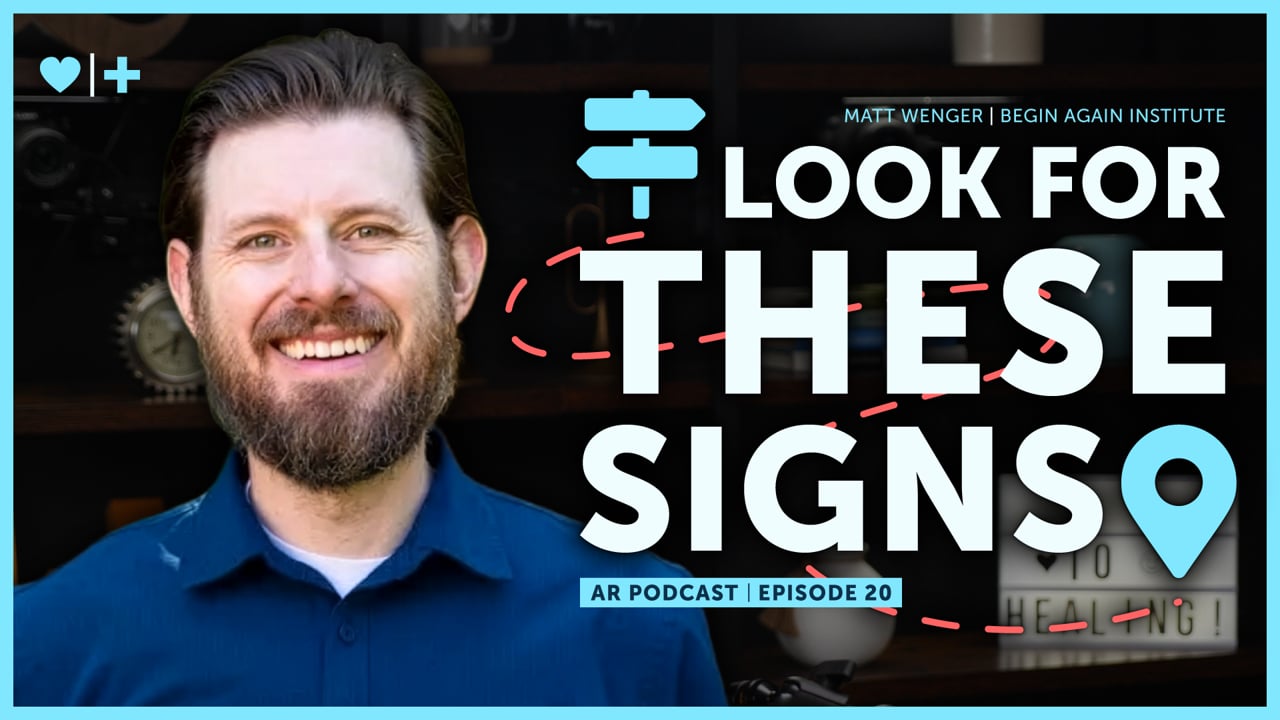
What does a true recovery roadmap look like? Does reaching the final destination simply mean stopping the addictive behaviors? In Episode 20, we welcome back Matt Wenger, Clinical Director at the Begin Again Institute, for part two of a conversation on healing sexual addiction. We get practical about the difference between sobriety and recovery, signs that someone is ready to address his/her addiction, how an unfaithful spouse can support a traumatized partner while doing their own healing, and so much more. We believe that no matter how far away it feels you can find real intimacy again.Matt is the Executive Clinical Director of Begin Again Institute, a treatment center that offers 14-day Trauma Based Intensives for Men seeking recovery from porn and sex addiction. Begin Again Institute also offers intensives for Betrayed Partners. He has served more than 1,500 families in that setting…
Continue reading →
Does My Spouse Deserve Another Chance After Betrayal?
“Give everyone a second chance” used to be my motto … until I sat in the excruciating pain of my husband's affair. How to work through infidelity wasn’t in my wedding vows, and it's probably pretty safe to assume it wasn’t in yours either.
So why on earth would anyone agree to give their unfaithful spouse a second or, heaven forbid, a third chance to pull it together? I talk to people nearly every day who are in the midst of recovery, and I experienced two particularly poignant calls last week:
Heartbroken and filled with frustration, a betrayed wife asked me how many chances I think an unfaithful spouse should get. Her husband was in a limerent affair that he was struggling to end, and she was at the end of her rope.
The very next day, I was on a call with an unfaithful woman whose husband had been willing to work through her…
Continue reading →
Why is Trusting Again So Hard?
Have you ever wondered why it's so hard to reestablish trust? Just last week a couple in my office struggled with this reality. Johnathon felt he had displayed amazing progress with his attentiveness and follow through in the marriage. Sue, on the other hand, still saw him as self-centered and felt that he'd made no improvement at all. What makes our points of view differ so radically when it comes to behaviors within the marriage? (Please note: names have been changed to protect identities.)
Sanctity of the Topic
Couples fight because they are both right. I learned this long ago. No one would argue a topic, knowing they're wrong. Plain and simple, we fight when we believe we're right and the other person is wrong. The problem stems from the fact that we're not always on the same topic. Typically, one party speaks from the perspective of how…
Continue reading →
Understanding the Impact of Betrayal Trauma with Andrea Rogers
If you've ever wondered why nobody knew what to do with you after your world fell apart, you're not alone. In this bonus episode, board-certified betrayal trauma coach Andrea Rogers shares her own story of discovering a 12-year affair, the difference between real recovery and simply modifying behavior, and how her healing led her to launch Intimate Partner Betrayal Awareness Day on August 4th. Betrayal trauma is real, and so is the community of people who get it.Andrea Rogers is a Board Certified Coach and Certified Partner Coach with APSATS, known for her empowering voice for betrayed partners. With over 20 years of experience in emotional wellness and empowerment coaching , she is the founder of Fully Alive Coaching and the Intimate Partner Betrayal Alliance, along with the creation of Intimate Partner Betrayal Awareness Day.
Continue reading →
Anger: Its 6 Roots
It seems to me that much is written about managing anger, but not as much about the roots of our anger. If there is a universal emotion that we see as therapists when infidelity has been exposed, it's definitely anger.
Consider joining Hope for Healing where you'll find community for isolation and healing for shame —and that's just the beginning.
Learn More | Hope For Healing!
Whether it's anger at their spouse, themselves, or the whole world, anger is a very common part of disclosure. If reconciliation is going to happen, the anger has to be addressed. Many times, I have to help spouses realize that if they didn't care, they wouldn't be angry about it.
You are angry because your heart is broken.
Anger is generally a secondary emotion caused by other…
Continue reading →
Is My Spouse a Sex Addict? Signs, Hope and What to Do Next with Matt Wenger
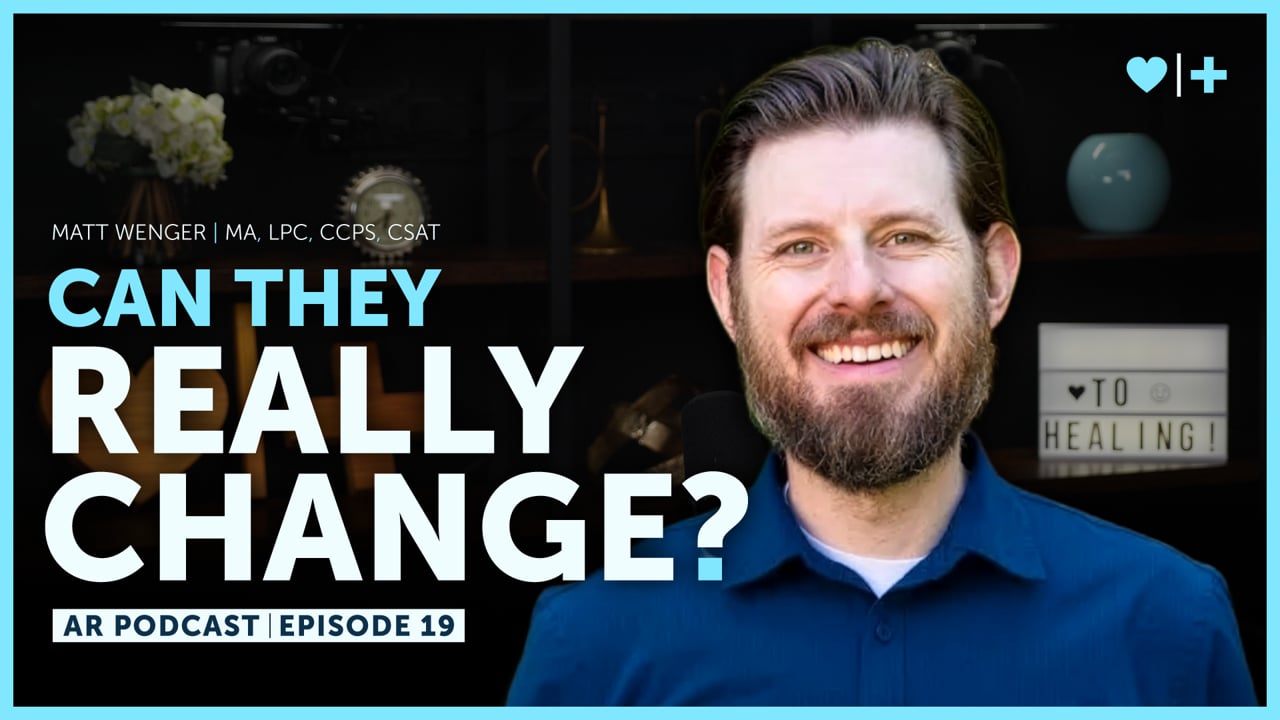
Attempting to make sense of the affair is painfully confusing – especially when there are signs of sexual addiction. In Episode 19, Matt Wenger, Clinical Director at the Begin Again Institute, joins the podcast to explain how sex addiction looks different from other types of infidelity and what must be present for true recovery to occur within the addict. Matt shares a message that every betrayed spouse needs to hear: This is not your fault, your skepticism is protecting you, and you don't have to settle for anything less than a whole, authentic relationship. Matt is the Executive Clinical Director of Begin Again Institute, a treatment center that offers 14-day Trauma Based Intensives for Men seeking recovery from porn and sex addiction. Begin Again Institute also offers intensives for Betrayed Partners. He has served more than 1,500 families in that setting since 2019…
Continue reading →
The Biggest Myths About Unfaithful Wives
*Sensitivity Warning: Today, we are talking through common misunderstandings and misconceptions behind women who engage in affairs. If you find yourself early on in recovery or in a raw space, it might be triggering or frustrating to hear these explanations. If that happens to be the place you are in today, I understand, and I hope you stay with me.
Betrayed Men: You are widely underrepresented and under acknowledged in the infidelity recovery field. My hope is that we will address some challenges specific to you — because we see you, we know you are out there, and we want you to feel a little less alone.
Unfaithful Women: You've been misunderstood as well. My hope is that you can begin to untangle some of the common misconceptions about your affair.
Seductress. Temptress. Tease. Slut…
Continue reading →